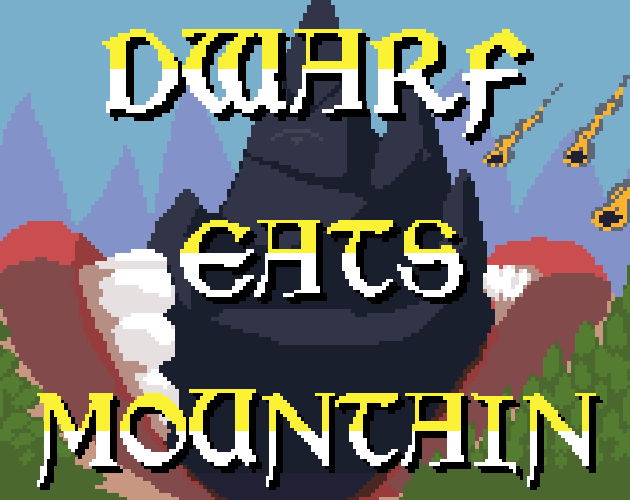
Calling a game “the best incremental” is subjective. The useful question is why its loop can remain interesting after the numbers become enormous. The answer is not simply more upgrades; it is that new systems repeatedly change what the player should optimize.
1. Progress is a network, not a single number
Mountain damage creates ore, but Runners must deliver it. Housing enables more units, but raises the cost of every expansion. Scientists can make later purchases cheaper or unlock a weapon breakpoint. A powerful build can even create calamities faster than its logistics can survive.
Because these systems constrain one another, “buy the largest damage number” is often wrong. The player keeps diagnosing the network instead of following one permanent priority list.
2. Upgrades change roles, not only values
The most memorable breakpoints give an old unit a new job:
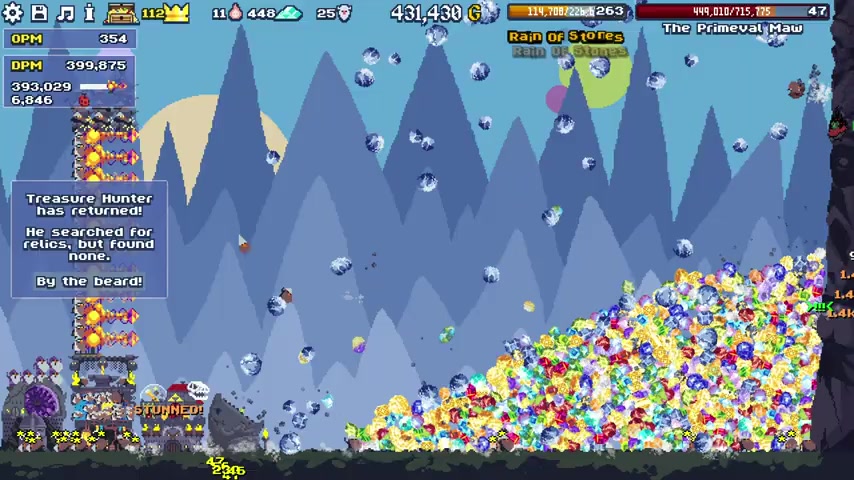
- Lasers can move from modest damage to a damage-and-gem engine.
- Ballistas turn target coverage into Den rewards and later scaling.
- Calamity defenses can become calamity-harvesting tools.
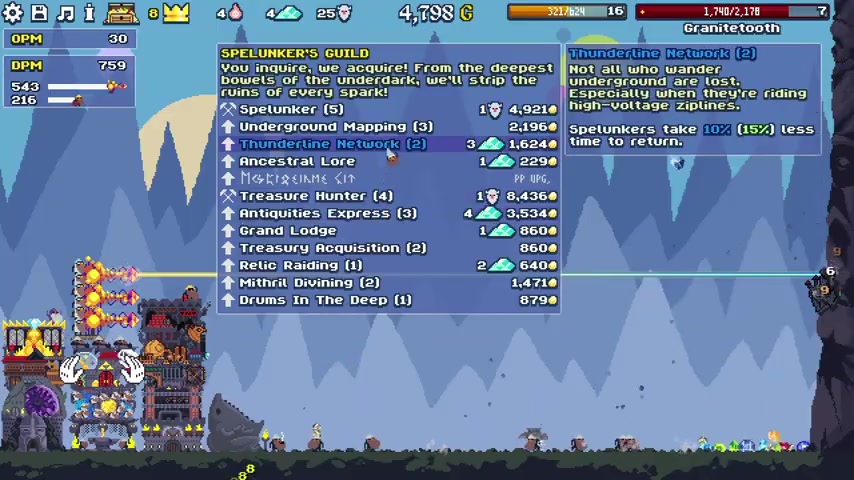
- Underground explorers add a delayed economy outside the visible battlefield.
- Faith turns spare population into another spendable progression axis.
These are qualitative changes. They invite the player to revisit an earlier judgment rather than merely buy another 10% bonus.
3. Multipliers create planning depth
Large endgame numbers are satisfying only when the player can explain where they came from. Dwarf Eats Mountain layers multipliers from artifacts, unit-specific upgrades, Faith, Mapping, Den history, research, and Prestige.
The planning challenge is timing: unlock a cumulative bonus before farming its trigger, feed the engine that has the best future multiplier, and avoid spending scarce Mithril on a flat gain that delays a system-wide upgrade.
4. Artifacts make commitment meaningful
Artifacts do more than randomize stats. A strong fire, Laser, Ballista, or economy effect asks the player to commit the run in a direction. That creates two useful tensions:
- exploit the artifact now or preserve a flexible build for a later drop;
- deepen the current engine or buy broad support that survives the next Prestige.
Randomness works because it changes the plan without fully replacing player judgment.
5. Calamities reverse the meaning of risk
Early calamities threaten Runner uptime and income. Later effects can convert the same events into gems, Dens, buffs, or resource opportunities. The optimal response changes from avoidance to controlled exposure.
This reversal prevents defensive progression from becoming a solved “always maximize resistance” problem. The player must compare disruption cost with trigger value in the current build.
6. Prestige changes the opening, not just the total
A satisfying reset system should alter decisions after the reset. Starting resources, free units, retained effects, deeper building access, and new upgrade tiers compress old problems and expose new ones earlier.
The first run asks how to transport a handful of ore. A later run may begin by routing artifact sources, Faith, underground returns, and several damage engines at once. The scenery repeats, but the decision density changes.
7. Active play is targeted, not mandatory
Pushing ore, waking Runners, aiming a rocket, and repositioning buildings matter most at bottlenecks. They do not require constant clicking; they let the player intervene when one action prevents a large loss.
That balance supports both idle observation and deliberate optimization. The player can step back when the system is stable and lean in when a boss, calamity, or stranded artifact creates a decision.
8. The design lesson
The game’s longevity comes from repeatedly changing the answer to three questions:
- What is the current bottleneck?
- Which system converts today’s resource into tomorrow’s multiplier?
- What must be completed before advancing the mountain or resetting the run?
An incremental game stays interesting when rising numbers reveal new relationships. Dwarf Eats Mountain succeeds when its upgrades make the player reinterpret the machine, not merely wait for it.
“最好玩的增量遊戲”本來就是主觀判斷。更有價值的問題是:當數值已經膨脹到極大時,它為什麼仍能產生樂趣?答案不只是升級數量多,而是新系統會反覆改變玩家應該優化的目標。
1. 成長是一張網絡,不是單一數字
山體傷害會產礦,但必須由搬運工交付;住房允許更多單位,卻抬高每次擴張成本;科學家能降低後續支出或解鎖武器節點;過強的傷害甚至會讓災厄速度超過物流承受能力。
這些系統彼此制約,因此“買面板數字最大的一項”經常是錯誤答案。玩家需要持續診斷整張網絡,而不是永遠照同一張優先級清單行動。
2. 好升級會改變職責,而不只是增加數值
最有記憶點的節點,會給舊單位增加新工作:
- 激光炮從普通傷害轉成傷害與寶石雙引擎;
- 魚叉弩炮把目標覆蓋轉化為巢穴獎勵與後續成長;
- 災厄防禦可以反轉為災厄收割;
- 地下探索在可見戰場之外增加延遲經濟;
- 信仰把閒置人口轉成另一條可消費成長軸。
這些都是質變,會讓玩家重新評價此前認為弱或可有可無的系統,而不只是再買一條 +10%。
3. 乘算讓規劃真正有深度
終局鉅額數字只有在玩家能解釋來源時才有滿足感。遊戲把神器、兵種升級、信仰、地層測繪、拆巢歷史、研究與轉生疊成多層倍率。
難點在於時機:刷取前先解鎖累計獎勵,把資源供給未來倍率最高的引擎,並避免用稀缺秘銀購買固定小收益,從而推遲全系統升級。
4. 神器讓構築承諾有意義
神器不只是隨機屬性。強力火焰、激光炮、魚叉弩炮或經濟效果,會邀請玩家把本局押向一個方向,因此形成兩組有意義的張力:
- 立刻利用當前神器,還是為後續掉落保持彈性;
- 深化本局主引擎,還是購買能跨越下一次轉生的廣泛支援。
隨機性之所以有效,是因為它會改變計劃,卻不會替玩家完成判斷。
5. 災厄會反轉風險的含義
前期災厄威脅搬運工在線率與收入;後期效果卻可能把同樣事件轉化為寶石、巢穴、增益或資源機會。最優答案因此從全面迴避變成受控承受。
這種反轉阻止防禦成長變成“抗性永遠拉滿”的已解問題。玩家必須在當前構築下比較幹擾成本與觸發價值。
6. 轉生改變開局,而不只是提高總量
優秀的重置系統應該讓重置後的決策發生變化。起始資源、免費單位、保留效果、更早的建築權限與新升級層級,會壓縮舊問題,並讓新問題更早出現。
第一輪只是在思考如何運回少量礦石;後續輪次可能一開始就要並行規劃神器來源、信仰、地下返回和多個傷害引擎。場景重複了,但決策密度已經不同。
7. 主動操作是定點幹預,而不是強制點擊
推礦、拍醒搬運工、瞄準火箭和移動建築,在瓶頸處最有價值。它們不要求玩家持續點擊,而是允許一次操作避免更大的損失。
這種平衡同時支持放置觀察與主動優化:系統穩定時可以退後,首領、災厄或掉在遠處的神器製造決策時再介入。
8. 真正的設計結論
遊戲的耐玩來自反覆改變三個問題的答案:
- 當前瓶頸是什麼?
- 哪個系統能把今天的資源轉成明天的倍率?
- 推進山體或重置運行前,必須先完成什麼?
當數字增長能夠揭示新的系統關係,增量遊戲才會持續有趣。Dwarf Eats Mountain 最成功的地方,是升級會讓玩家重新理解整臺機器,而不只是等待它運行。